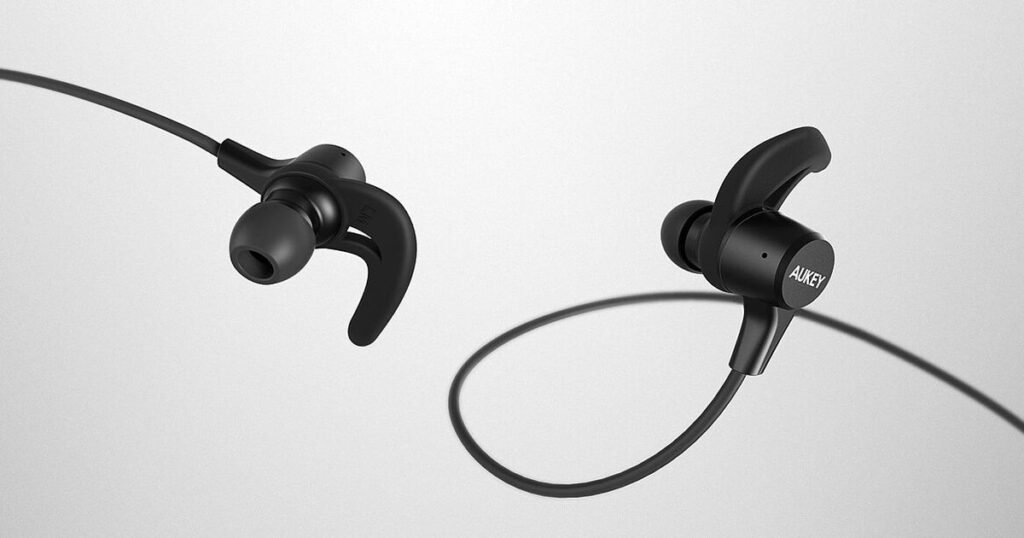
If you run, ride a bike, or wear headphones most of the working day, someone has probably told you to try open-ear headphones, and you have seen bone conduction sets marketed as the safest option for the street. They are genuinely useful in the right setting, and genuinely disappointing in the wrong one. The catch is that two different technologies share the same marketing language. Once you know which is which, choosing gets much easier.
It is easy to waste money here, since both designs get sold with the same words on the box.
Two different things being sold as one
Bone conduction is the specific design: a small transducer sits against your cheekbone or jaw and vibrates it, and those vibrations reach your inner ear through the bone, bypassing the ear canal and eardrum entirely. Your ears stay completely open, and nothing goes inside them. Open-ear is the broader category, and most open-ear headphones are actually air-conduction designs: a small driver rests just outside the ear canal, aimed at it, or clips onto the ear. Your ear canal stays unsealed, but sound still travels through the air to get in. The practical difference is sound quality and leakage, not just branding.
Shops put open-ear on both kinds of product, reviews mix them together, and the photos look similar at a glance. The reliable clue is where the sound leaves the device. One design presses a pad against skin and bone, the other points a small speaker at your ear from a short distance. That difference explains the bass, the leakage and the fit.
How the sound actually reaches your ear
Bone conduction skips the outer ear. A transducer presses against your cheekbone or jaw, and the vibration travels through bone to the inner ear. Your eardrum barely joins in. That route is why nothing blocks your canal, and why the sound can feel as though it starts inside your head rather than in front of it.
Open-ear air designs take the ordinary route: a small driver pushes sound across a gap of air into an open canal. No seal forms, so no pressure builds and nothing gets trapped, but the sound cannot be contained either. It is a normal headphone with the plug removed.
What they are genuinely better at
The strongest argument is situational awareness. Because nothing blocks your ear canal, you hear traffic, a bike bell, a colleague, a train announcement, or a baby monitor while music or a podcast plays. For running, cycling, walking at night and warehouse or office work, that is a real safety and etiquette benefit, not a marketing line. Comfort is the second win: no ear tips pressing into the canal, so no pressure points, itching or earwax pushed inward on long sessions. People who find in-ears uncomfortable after an hour, or who get ear infections easily, often get on far better with them. They also suit anyone working in a setting where being half-cut-off from the room is unacceptable.
Staying aware of traffic and the room
The safety claim is real, though narrower than the adverts suggest. A car approaching from behind, a cyclist passing on your left, an announcement over a station speaker: a sealed earbud hides all three and an open design does not.
It is not a guarantee of anything. Wind, traffic and your own audio mask a great deal, and some places restrict headphone use on the road whatever the design. Keep the volume low enough that you could still hold a conversation.
Where they fall short
Bass is the first casualty. A sealed in-ear gets its low-end punch from the closed air volume, and open designs simply do not have that seal, so kick drums and basslines sound thin by comparison. On a noisy train, plane, or next to a lawnmower, there is nothing to block the noise, so your audio competes with the world and tends to lose. Turning the volume up to compensate is the obvious response and the wrong one, because it is exactly how people give themselves lasting hearing damage. Sound leakage is the third issue: in a quiet carriage, your podcast can be audible to the person next to you. In-ear designs suffer none of these problems, which is why they still dominate for travel and noisy commutes.
Leakage, privacy and how your calls sound
Open-ear air sets leak sound into the room. In a quiet carriage or a shared office the person beside you can hear the shape of your podcast, and during a call they hear the tinny half of the conversation. Bone conduction leaks less, because the transducer pushes into you rather than firing into the air, but a close neighbour still catches it once the volume climbs.
Your microphone picks up more of the room, so the person on the other end may hear your street, your cafe or your keyboard. For a day of client calls, a set with a boom arm and a seal will serve you better than either open design.
Bass, volume and the honest limits
Sealed earbuds get their low end from air trapped behind the tip. Take the seal away and the deepest notes lose their weight. That is physics rather than tuning. Kick drums land softer, basslines lose their push, and voices sound thinner next to a sealed pair at the same volume.
The volume ceiling bites just as hard. Outdoors, in traffic or near machinery, you sit near the top of the range and still want more, and sets that go louder are the ones that invite hearing damage. These designs suit podcasts, calls and music at moderate volume in moderate noise. A flight, a long train ride or a loud workshop is the wrong place for them.
Fit, fit, and fit
With open designs, fit decides everything, and it is far more personal than with in-ears. If you wear glasses or sunglasses, the arms sit exactly where a neckband or ear hook wants to be, and a good set will still be comfortable while a bad one is impossible for an hour. The same goes for helmets, headscarves, long hair swept back, and caps. Placement matters more than people expect: bone conduction transducers need firm contact against bone, so if the band sits slightly loose you lose volume and bass. Weight and clamp force matter over a two-hour session, and for the clip-on style, a secure-but-gentle pinching around the ear. Sweat resistance and an IP rating are worth checking if you are buying for workouts.
Glasses are the usual sticking point, because the arms sit exactly where a neckband or an ear hook wants to be. Helmets and caps add pressure, and hair swept up can push a band out of place. Bone conduction pads need steady contact, so a loose band quietly costs you volume and bass.
The audiologist view worth hearing
Bone conduction feels safer because nothing enters the ear canal, but it is not a free pass for your hearing. The sound still arrives at the cochlea, and loud is loud regardless of the route in. If you routinely push the volume up because traffic noise is drowning the audio, the risk to your hearing is the same as with any headphone, and the open design actively encourages that behaviour. Some people with certain types of conductive hearing loss, meaning problems with the outer or middle ear, also report better results from bone conduction with the right device, but that is a conversation for a hearing professional, not a product listing. Bone conduction headphones are not hearing aids and are not a substitute for one. Overall exposure is what matters: keep volume moderate, take breaks, and treat them as a way to stay aware of your surroundings rather than a way to listen louder.
If you want one habit that protects your hearing, it is keeping the volume moderate and the sessions shorter, whatever you wear. Damage from loud sound shows up years later as ringing or a muffled edge that will not clear. Ringing or pain after a session is a question for a professional, not a reason to buy another pair.
How to choose between them
If your priority is hearing what is happening around you while listening at low volume, which covers road running, cycling, gym sessions and long days at a desk, start with open-ear air conduction for sound quality and reach for bone conduction if you want the ears completely unimpeded and you do not mind a little less bass. If your priority is enjoying music on a commute, a flight or in an open-plan office that you want to shut out, buy noise cancelling in-ears instead: open designs will disappoint you and you will push the volume up to compensate. Before buying, check the return policy, because fit is make-or-break and you cannot judge it from a spec sheet. Take the set for a long walk in the first week and decide honestly. If it is uncomfortable after an hour or you cannot hear your podcast over road noise, send it back.
Compare them with ordinary earbuds too. A basic sealed earbud blocks more noise than either open design and often costs less, so open headphones earn their price only when awareness of the room is the point.
Pros and cons
What works well
- You keep hearing traffic, announcements and people around you, which is the single biggest reason to buy them.
- No ear-canal pressure, itching or wax issues, so they stay comfortable for hours and suit people who get ear irritation from in-ears.
- Ear canal stays open, so they coexist with earplugs for partially blocked environments and are easier to use during and after ear issues.
- Sweat-friendly designs and IP ratings are common, and the neckband or hook style is hard to lose compared with loose earbuds.
What to watch out for
- Noticeably less bass and overall impact, because there is no sealed air volume behind the driver.
- No noise blocking at all, so trains, planes, traffic and machinery simply overwhelm them.
- Sound leaks out, which is antisocial in quiet shared spaces.
- The temptation to crank the volume in noise is real, and that is a hearing-health risk rather than a convenience feature.
- Fit is more personal than with in-ears, and glasses, helmets and hairstyle can rule a set out entirely.
Verdict: best for, and who should skip it
Best for: runners, cyclists, people who work on their feet or in shared spaces, and anyone whose ears dislike in-ear tips. Skip if you mostly listen on flights, trains, buses or in a noisy office, because a sealed noise-cancelling in-ear will serve you far better at the same money. The core trade-off is awareness versus sound quality: you cannot have both from one set, so pick the one that matches where you actually listen.
Questions
Do bone conduction headphones work if I wear hearing aids?
It depends on the type of hearing loss and the device, and it is genuinely a question for an audiologist rather than a product description. Bone conduction headphones are not hearing aids and cannot replace properly fitted ones. If you have hearing loss, get advice before spending money.
Can other people hear my music?
With open-ear air conduction designs, yes, especially in a quiet room at higher volumes. Bone conduction leaks less because the transducer is touching you rather than firing into the air, but at high volume it is still audible to someone sitting close by.
Are they safe to use while cycling on the road?
They are the safest headphone style for it, because your ears stay open and you keep awareness of vehicles and other riders. Some places still restrict headphone use while riding, so check your local rules, and keep the volume low enough to hear a car behind you.
Do open designs work on a plane?
Poorly. Cabin noise is loud and constant, and with nothing sealing your ear the audio has to fight it. You will end up turning the volume up, which is the worst outcome for your hearing. Pack noise cancelling in-ears for the flight.
Next step: Going further: read our explainer on Bluetooth audio codecs to see which ones actually change what you hear, and our comparison of ANC versus transparency mode if you are weighing noise cancelling instead.
Nexgadgets provides general information, not professional advice. Always do your own research.


